
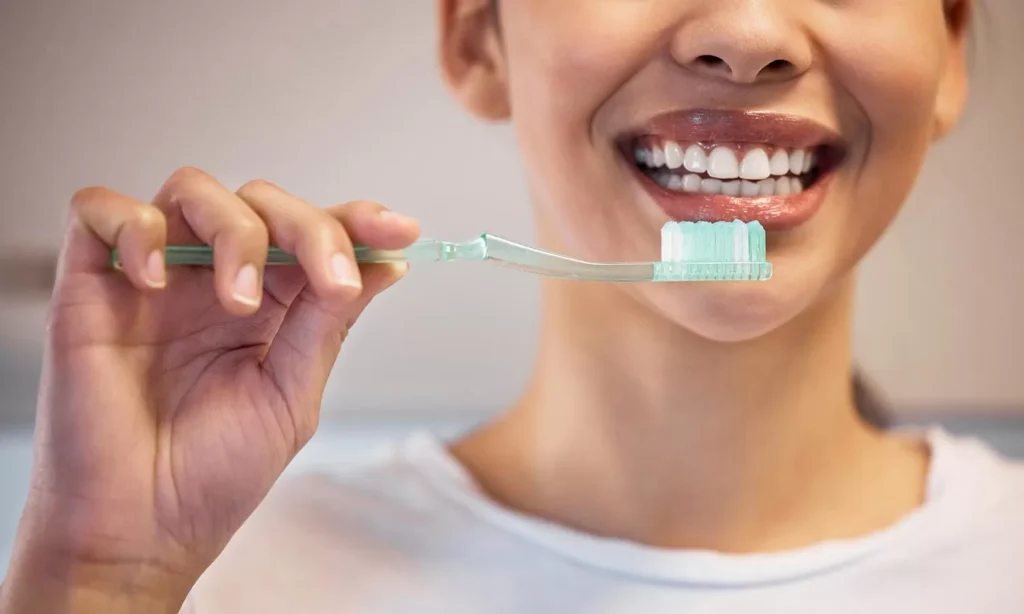
Daily dental habits determine oral health. You need a proper teeth cleaning routine, and you must use the right tools. When you follow specific steps, you can effectively remove plaque.
Effective Brushing Techniques
Fluoride toothpaste strengthens tooth enamel, and it helps protect against early tooth decay. Reach the gumline, where plaque accumulates. Brush the chewing surfaces of your molars, because these grooves trap food. Tips include:
- Brush your teeth twice daily for two minutes each time.
- Angle the bristles toward the gums and use short strokes.
- Clean both outer and inner surfaces of each tooth.
- Brush all chewing surfaces thoroughly to remove trapped food.
- Make morning and evening brushing sessions part of your daily routine.
Choosing the right toothbrush matters. Select one that fits your mouth, and it should have soft bristles. Replace your toothbrush if the bristles fray. Worn brushes clean less effectively. If manual brushing is difficult, use an electric toothbrush. Whether you use a standard or electric brush, brush at the same times daily for consistency. Wear braces or dental appliances, and use a specialized brush.
Thorough Interdental Tools
A toothbrush does not reach every space between your teeth, especially in tight contacts and behind back molars. Clean between teeth daily, or food particles remain trapped and cause plaque buildup. Since bristles can miss narrow spaces, use dental floss for areas a brush cannot reach. Interdental brushes are another option for wider gaps or dental appliances. Teeth cleaning and flossing removes debris that could cause gum inflammation or cavities. Use enough inches of dental floss.
Wind most of it around your middle fingers, and gently guide it between your teeth. Form a C-shape around each tooth, and move the floss up and down to clean both sides. Slide the floss gently beneath the gumline, while not snapping or forcing it. Persistent bleeding should be discussed with your dentist. They can check if there is an underlying issue. Some people use interdental brushes, or small conical brushes designed to clean spaces larger than tight contacts.
Balanced Nutrition and Visits
Dietary choices shape oral environments. Eat healthy foods, and limit sugary beverages. Choose whole grains, lean proteins, fruits, and vegetables to support your body’s defenses against dental decay. Avoid frequent sipping or snacking on sweetened drinks and foods. This prolongs acid exposure and raises cavity risk. Read food labels and watch for hidden sugars, such as sucrose or corn syrup. Select water instead of soda or juice to keep your mouth cleaner. Carry a refillable water bottle, and stay hydrated. Calcium helps remineralize teeth, and it keeps enamel strong. Dentists identify issues early, and they provide professional treatments. Between visits, track changes or discomfort. Communicate these to your dental team.
Adjust Teeth Cleaning Today
You can implement these habits today, and you will see gradual improvements. If you follow this routine, you maintain clean teeth. Update your daily schedule, and schedule your next professional checkup. Since prevention is the primary goal, start applying these tips immediately. Review your current brushing techniques today.
Find more practical guides on Metromsk.Com.
- How to Use Metromsk.Com: A Reader’s Guide to Finding Answers Faster
- Metromsk.Com Editorial Standards: How Guides Are Researched, Checked and Updated
- Metromsk.Com Topic Desks: A Guide to the Eight Categories and What Each Covers
- How to Protect Your Online Accounts: Passwords, Passkeys, MFA and Phishing
- How to Build an Emergency Fund Step by Step