
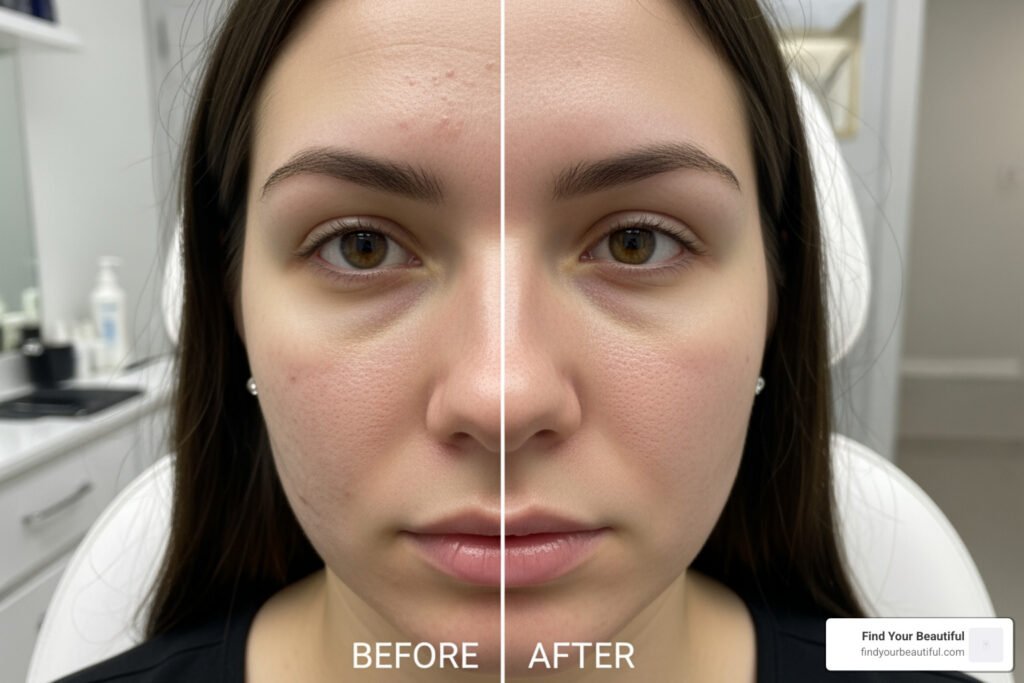
Chemical peels use acid solutions to exfoliate the skin’s surface, and the right kind depends on your skin type and the depth of your scarring. When applied by trained staff, they lift away damaged layers and reveal fresher skin underneath. A peel treats acne scars and addresses texture and tone. Here is more information on this treatment when it’s used for acne scarring:
Using Specific Peels
Peels come in different strengths, and each one targets specific concerns. Superficial peels treat mild scarring on the skin’s outermost layer. If your scars run deeper, a medium or deep peel reaches lower layers where pigment and texture changes sit. Your provider matches the peel to your goals during a consultation.
Here are three ways different chemical peels work to target and fade your acne scars:
- Smoothing surface unevenness: Glycolic acid gently exfoliates the outermost layer of your skin, which helps soften and fade mild, shallow scars.
- Clearing active congestion: Salicylic acid penetrates oily pores to reduce breakouts and help prevent new scars from forming in the first place.
- Rebuilding deeper tissue: Trichloroacetic acid reaches into the deeper layers of your skin to help smooth out more stubborn, established scarring.
Targeting Acne Breakouts
Active breakouts complicate scar treatment. A peel clears clogged pores, and it removes dead skin that traps bacteria. When breakouts settle first, your provider can focus fully on the scars left behind. Salicylic acid peels suit this stage because they cut through oil.
Timing matters with active acne. If you peel during a severe flare, irritation may worsen the skin. Your provider reviews your current condition, and they decide whether to treat or wait. This step protects your skin from added stress.
Slowing Oil Production
Excess oil feeds new breakouts and fresh scarring. Certain peels reduce surface oil, and they leave pores less congested. Since oily skin often triggers repeat acne, controlling it supports scar work. Salicylic acid reaches into pores where oil collects. Your provider recommends products that pair with your peel schedule.
Reducing Pigmentation
Dark spots typically linger after acne clears. These marks, called post-inflammatory hyperpigmentation, respond to specific peels. A peel lifts pigmented cells, and it prompts newer, more even-toned skin to surface. Glycolic and mandelic acids work well for this concern.
Darker skin tones need extra care with pigmentation peels. If the peel runs too strong, it may cause more discoloration. Your provider chooses a gentler formula, and they adjust the strength as your skin adapts. Sun protection between sessions keeps results steady.
Results that target pigmentation take time. Pigment fades gradually across several treatments. You track progress with your provider, and photos show the changes over time.
Get Chemical Peels Near You
Chemical peels offer one route for treating acne scars and uneven tone. The best peel depends on your skin, your scars, and your history with acne. Book a consultation at a med spa near you to discuss your options. Bring your questions and share your skincare goals with the staff. They will explain each peel type and outline what to expect. Schedule your appointment today to start the conversation.
Explore more helpful articles like this on Metromsk.Com.
- How to Use Metromsk.Com: A Reader’s Guide to Finding Answers Faster
- Metromsk.Com Editorial Standards: How Guides Are Researched, Checked and Updated
- Metromsk.Com Topic Desks: A Guide to the Eight Categories and What Each Covers
- How to Protect Your Online Accounts: Passwords, Passkeys, MFA and Phishing
- How to Build an Emergency Fund Step by Step