
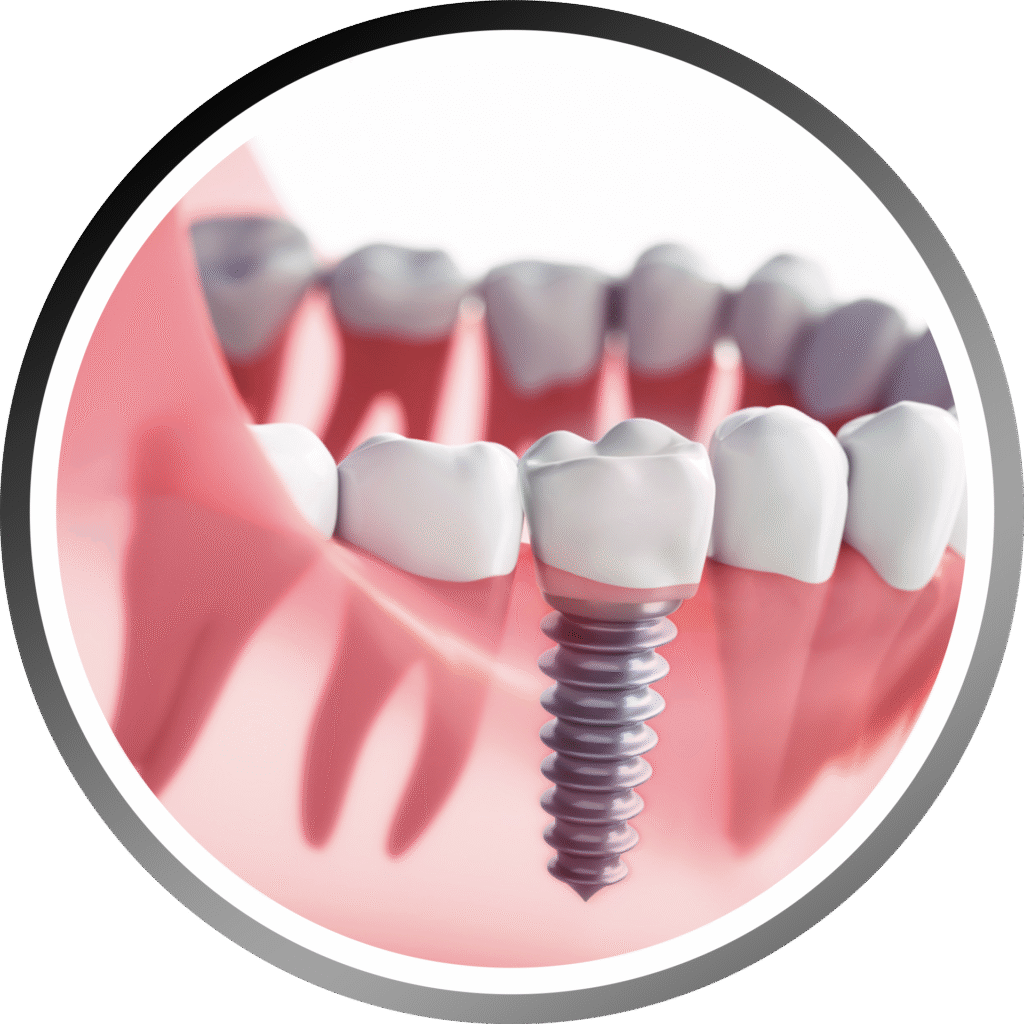
Dental implants, which are titanium posts designed to replace missing tooth roots, are surgically placed in the jawbone to provide a stable foundation for replacement teeth. They support crowns, bridges, or dentures; this design restores chewing function, speech clarity, and facial structure. Patients with missing teeth benefit from implants through improved comfort and long-term oral health. Here is more information on what dental implants are, how they work, who benefits from them, and how quality of life improves:
What Are Dental Implants?
Dental implants are small titanium posts designed to replace the root of a missing tooth. The post is placed directly into the jawbone, where it anchors a replacement tooth, and titanium is the material of choice because it fuses naturally with bone tissue. This fusion process, which is known as osseointegration, creates a stable, long-lasting base that functions like a natural tooth root.
Once the implant has fused with the jawbone, a connector piece called an abutment is attached, and a custom-made crown, bridge, or denture is then secured to it. The result is a replacement tooth that looks, feels, and functions like the surrounding natural teeth. Because the implant is anchored directly into the bone, it does not shift or slip.
How Do They Work?
The implant process begins with a dental evaluation. This evaluation includes X-rays or other imaging to assess bone density and jaw structure, which helps the dentist determine the appropriate treatment plan. Once the jaw is ready, the dentist surgically inserts the titanium post into the bone. Osseointegration typically takes three to nine months, but healing time varies by patient. After healing is complete, the dentist attaches the abutment.
Who Do They Help?
Dental implants help a range of patients experiencing tooth loss or related dental complications. Suitable candidates typically include:
- Patients who have lost one or more teeth due to decay, injury, gum disease, or age-related wear
- Patients who experience discomfort or difficulty with ill-fitting dentures while eating or speaking
- Athletes and accident survivors with trauma-related tooth loss seeking to restore both function and appearance
Candidacy depends on factors such as gum health, jawbone density, and conditions like uncontrolled diabetes or active gum disease, which a dentist can assess through a comprehensive oral exam and imaging review.
How Is Daily Life Improved?
Dental implants restore chewing strength, which allows patients to eat a full range of foods without restriction. Nutrition may improve. Patients no longer need to avoid fibrous vegetables, meats, or other foods that are difficult to chew with missing teeth or loose dentures, and this dietary expansion supports overall health. Speech may also improve, as implants eliminate the gaps and shifting that cause slurred or unclear pronunciation.
Implants support facial structure by preventing the bone loss that follows tooth extraction. Because implants are cared for like natural teeth through brushing, flossing, and routine checkups, they fit into daily hygiene habits. This combination of benefits contributes to a patient’s overall quality of life, and consulting a dentist helps patients learn more about the process.
Consult a Dentist Now
Dental implants address tooth loss by replacing both the root and visible tooth structure. They support better nutrition, clearer speech, and stronger facial structure; they also help patients avoid the discomfort associated with loose dentures or gaps. Candidacy depends on gum health and jawbone density, both of which a dentist can evaluate through imaging and examination. If you are living with missing teeth, schedule a consultation with a dentist. A dental professional can review oral health history, explain the procedure timeline, and outline next steps toward a restored smile.