
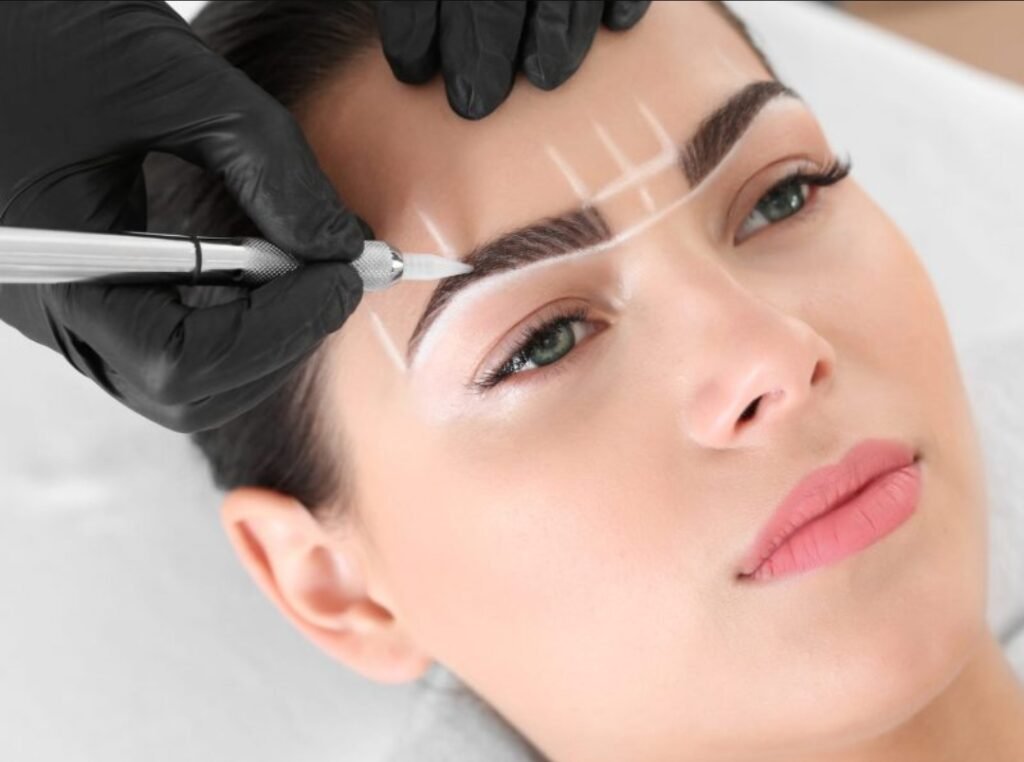
Eyebrow aesthetics play a role in facial appearance and personal grooming. Techniques for enhancing or restoring eyebrow definition have evolved significantly, and these range from traditional tattooing to more refined, semi-permanent methods. Microblading has gained notable attention among these methods, being a precise and naturalistic approach to eyebrow enhancement.
What Is Microblading?
Microblading is a form of superficial micropigmentation used to enhance, reshape, or restore the appearance of eyebrows. A trained professional uses a handheld manual tool fitted with a blade composed of stacked needles, depositing pigment into the upper layer of the skin. The result is a series of fine, hair-like strokes, and they closely replicate the look of natural eyebrow hair.
What Is the Process?
A microblading appointment involves several structured steps. Before the procedure begins, the practitioner conducts a thorough consultation. This includes reviewing the client’s goals, assessing skin type and tone, and discussing any relevant personal history. This information informs decisions about pigment selection, and the consultation allows providers and clients to agree on the right technique to use.
Brow Mapping
Eyebrow symmetry is a key factor in facial aesthetics. Practitioners can use anatomical landmarks and measurement tools to map out the ideal brow shape for each individual. Reference points, such as the nasal bridge and lateral eye corner, are used to determine the correct placement of the head, arch, and tail of each brow. Normal eyebrow thickness may range from 4 to 7 mm, and measurements are verified using specific instruments.
Microblading Procedure
A topical numbing cream can be applied to the brow area prior to the procedure to minimize discomfort. With the skin properly prepared, the practitioner begins depositing pigment using the microblading pen. The skin is stretched in multiple directions for stability, and each stroke is made at a consistent angle to replicate the natural emergence of a hair follicle.
Recovery Care
After the procedure, an antibiotic ointment may be applied to the brow area. Clients are advised to avoid water contact and touching the brows; scabbing and mild itching during the healing period are normal occurrences. Waxing or threading of the brow area should also be avoided. A follow-up appointment is typically scheduled a few weeks after the initial session to touch-up certain areas.
What Are the Benefits?
Microblading offers several practical advantages for individuals seeking a low-maintenance approach to eyebrow definition. A primary benefit is the reduction in daily grooming time, as defined brows are maintained without the need for makeup. The procedure is known for producing natural-looking results; the fine, individual strokes are designed to closely mimic real eyebrow hair, making the enhancement difficult to distinguish from natural growth.
Each treatment is customized, and the brow shape and arch height are selected to complement the individual’s unique facial structure. As a semi-permanent solution, the results typically last several months, offering a longer-term alternative to standard cosmetic products. Microblading can also be used in dermatological contexts to restore the appearance of eyebrows for individuals who have experienced brow loss.
Seek Professional Aesthetic Services
Microblading is a technically demanding procedure that requires proper instrumentation, and the quality of results depends directly on the skill of the practitioner performing it. Selecting an experienced professional is the most reliable way to achieve accurate, well-executed outcomes. Before scheduling any appointment, take time to research practitioners and ask questions during the consultation process.
Explore more helpful articles like this on Metromsk.Com.
- How to Use Metromsk.Com: A Reader’s Guide to Finding Answers Faster
- Metromsk.Com Editorial Standards: How Guides Are Researched, Checked and Updated
- Metromsk.Com Topic Desks: A Guide to the Eight Categories and What Each Covers
- How to Protect Your Online Accounts: Passwords, Passkeys, MFA and Phishing
- How to Build an Emergency Fund Step by Step