

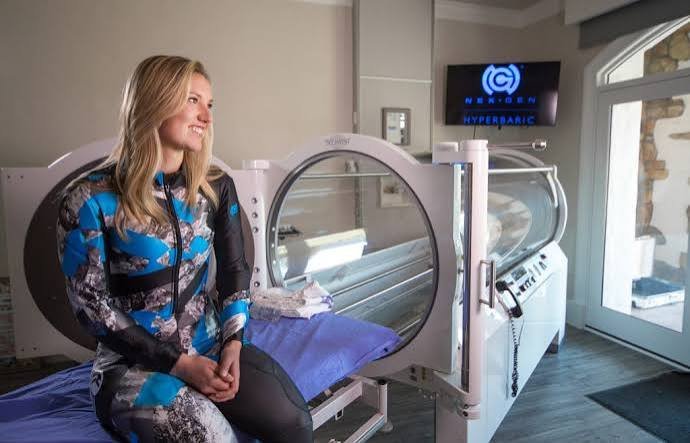
Hyperbaric therapy raises blood oxygen levels to support the repair of damaged tissue. The treatment uses 100% oxygen delivered at pressures higher than one atmosphere; this elevated pressure drives more oxygen into the blood. Clinicians apply it to chronic wounds with low oxygen levels; researchers have documented how the added oxygen changes cellular activity in ways that promote healing.
Effects on Tissue Growth
Hyperbaric therapy relies on the delivery of 100% oxygen inside a pressurized chamber. Under normal conditions, the arterial partial oxygen pressure ranges between 75 and 100 mmHg. When ambient pressure reaches 2.0 to 3.0 atmospheres, that value climbs to between 1,200 and 2,000 mmHg; the plasma holds far more dissolved oxygen than it does at sea level. This surplus reaches tissue with reduced blood flow, so oxygen-starved cells receive the oxygen they need; the wound-healing environment changes during treatment.
The added oxygen triggers structural changes that rebuild damaged tissue. It promotes angiogenesis, the formation of new blood vessels, and it supports collagen production that gives wounds their strength. Because oxygen supports healing cells, the therapy promotes tissue repair, and studies in diabetic foot ulcers have linked it to improved wound healing through stimulated growth factors. These changes support healing in chronic wounds that do not heal on their own.
Effects on Inflammation
Inflammation slows recovery in many damaged tissues. The therapy downregulates pro-inflammatory signals such as TNF-alpha and NF-kappaB. Multiple studies have reported this pattern across different settings, and reduced signaling lowers leukocyte migration, edema, and pain. Researchers also documented downregulation of interleukin-1 beta, which reduces the inflammatory burden on healing wounds.
Effects on Cell Survival
Oxidative stress and cell death threaten tissue during injury. The therapy upregulates protective enzymes, including superoxide dismutase and heme-oxygenase 1, and it lowers markers tied to oxidative damage. It also prevents apoptosis by supporting anti-apoptotic proteins while it reduces caspase-mediated cell death, so more cells survive the injury. This protective action extends to conditions such as ischemia-reperfusion injury, spinal cord injury and burn injury, where preserving cells supports tissue repair. Clinicians apply the therapy across a defined set of indications tied to tissue repair. The following conditions appear among its documented applications:
- Chronic wounds with low oxygen, including diabetic foot ulcers
- Ischemia-reperfusion injury
- Burn injury
Hyperbaric therapy has also been studied in spinal cord injury, and one clinical trial reported that it regulated inflammatory responses while supporting neurological recovery. Research includes both experimental studies and clinical trials, and much of the molecular data comes from animal models or cell cultures. Because those findings still require confirmation in patients, researchers continue to study how the results translate into clinical practice.
Schedule Hyperbaric Therapy Today
Hyperbaric therapy raises tissue oxygen, promotes new tissue growth, reduces inflammatory activity, and protects cells from death. These mechanisms support its use in chronic wounds, ischemia-reperfusion injury, spinal cord injury and burn injury, and research continues to examine these biological mechanisms. A wound care specialist can explain when hyperbaric therapy is used, discuss its documented applications, and describe how it fits within a broader treatment plan.