

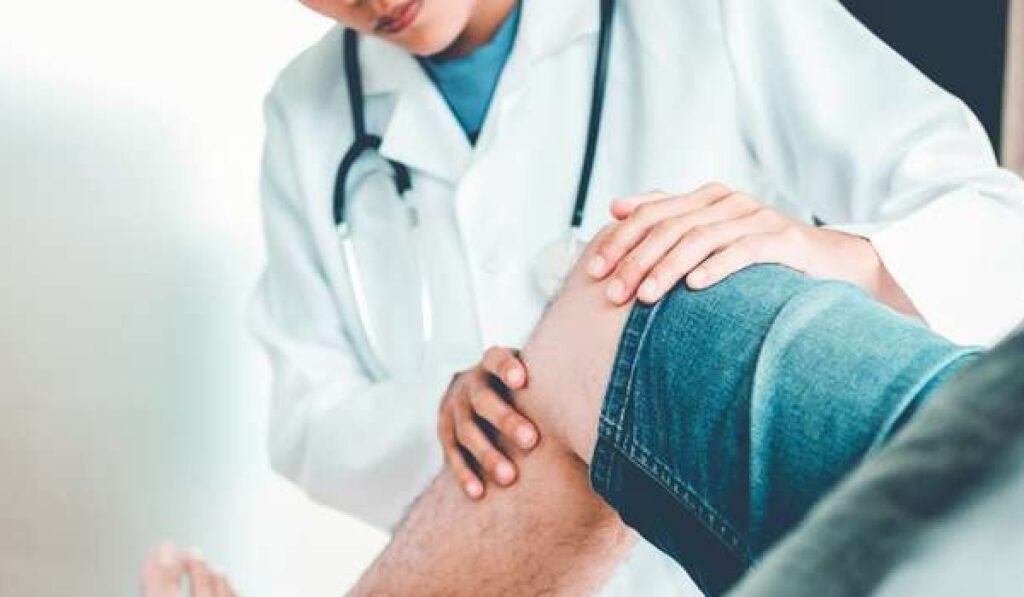
Chronic knee pain is discomfort in the knee joint that lasts three months or longer and commonly affects walking, climbing stairs, standing, and other daily activities. Many cases stem from osteoarthritis, a condition where the cartilage that cushions the ends of the bones gradually wears down. As knee cartilage thins, the bones rub together. This can lead to stiffness, swelling, and reduced range of motion. Here’s information about how to manage knee pain caused by osteoarthritis with non-surgical treatments:
Try Targeted Exercises
Specific movements can help strengthen the muscles that support the knee joint, reducing knee pain over time. Strong quadriceps, hamstrings, and hip muscles may help absorb some of the force that would otherwise pass through the knee. This can reduce strain on worn cartilage during everyday activities. Regular movement supports weight management, which can also lower the load on the knees. Some common exercises for people with knee osteoarthritis include:
- Straight-leg Raises: to strengthen the quadriceps without bending the knee
- Hamstring Curls: to target the muscles at the back of the thigh
- Wall Sits or Partial Squats: to build lower-body strength with controlled movement
- Step-ups on a Low Platform: may improve stability and balance
- Gentle Stretches: which may help maintain flexibility for the calves, hamstrings, and quadriceps
Low-impact aerobic activities such as swimming, water aerobics, and stationary cycling can also help build leg strength. These activities move the joint through its range of motion while placing less stress on it than running or jumping. Start slowly, and increase intensity over time. Sharp or worsening joint pain during exercise may mean you should stop and consult a medical provider.
Try Over-the-counter Pain Management Options
Several over-the-counter (OTC) products may help relieve mild to moderate knee pain, such as acetaminophen, a pain reliever that some people use for joint discomfort. Nonsteroidal anti-inflammatory drugs (NSAIDs), such as ibuprofen and naproxen, may help reduce both pain and inflammation. Topical NSAID gels are another option and are applied directly to the skin over the joint. Because less of the medication enters the bloodstream, topical options may be beneficial for people who cannot take oral NSAIDs. Before starting any new medication, talk with a healthcare provider, especially if you have other health conditions.
Work With a Specialist
If exercise and OTC options don’t provide enough pain relief, a specialist offers additional treatments. Genicular artery embolization (GAE) is a minimally invasive procedure performed by a vascular specialist. It targets the genicular arteries, which supply blood to the knee joint lining. For people with knee osteoarthritis, inflammation in the joint lining may cause abnormal blood vessels to grow. These vessels may contribute to pain signals.
During GAE, the specialist inserts a thin catheter into an artery, usually through a small puncture in the upper thigh. Using X-ray imaging for guidance, the specialist moves the catheter to the genicular arteries. Tiny particles are then released to reduce blood flow to the abnormal vessels. GAE is an outpatient procedure performed under local anesthesia and mild sedation, so many patients return home the same day.
Recovery is often shorter than with surgery, but results vary from person to person. A vascular specialist can review your medical history, imaging results, and symptoms to determine whether GAE is appropriate. They can also explain potential risks, such as bruising at the access site or temporary skin discoloration, and discuss how GAE fits with other treatments.
Reduce Your Knee Pain
Chronic knee pain from osteoarthritis can limit mobility and daily function. Non-surgical options, including targeted exercises, OTC pain relievers, and minimally invasive procedures like GAE, may help people manage their symptoms. Each approach has different benefits and limitations. The right combination depends on your symptom severity and activity goals. To get personalized advice about your pain, schedule a consultation with a vascular specialist to explore non-surgical treatment options.