
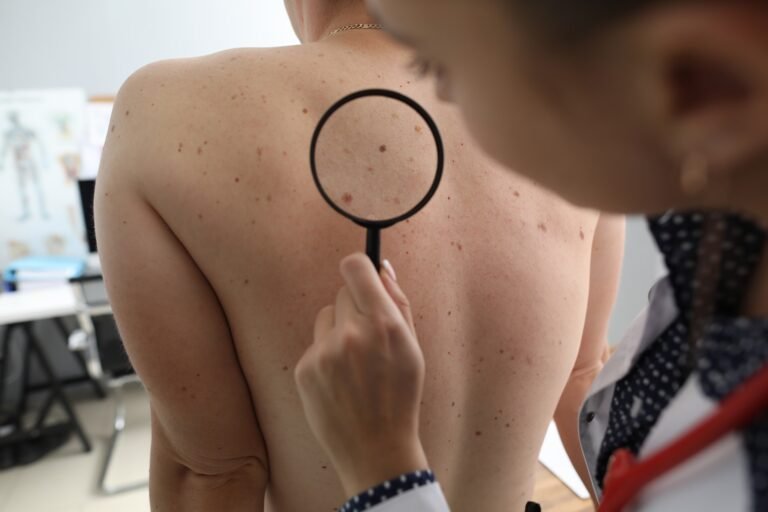
Skin cancer is one of the most common forms of cancer diagnosed worldwide. It develops when skin cells grow in an uncontrolled way, often as a result of exposure to ultraviolet (UV) radiation. The skin is the body’s largest organ and remains exposed to the environment daily, so it faces a high level of risk over the course of a lifetime. Understanding what warning signs to watch for can help you decide when to see a skin cancer specialist.
What Is Skin Cancer?
Skin cancer refers to the abnormal growth of cells within the layers of the skin. These growths typically begin in the outermost layer, known as the epidermis, though they can develop in deeper tissues as well. The condition is generally grouped into several main types, and each is named for the cells in which it originates.
Basal cell carcinoma is the most frequently diagnosed type. It tends to grow slowly and usually appears on areas that receive regular sun exposure, such as the face. Squamous cell carcinoma is the second most common form, and it may spread more readily if left unaddressed. Melanoma, while less common than the other two, is often regarded as the most serious because of its ability to reach other parts of the body.
Several factors may raise a person’s likelihood of developing skin cancer. Prolonged sun exposure, a history of sunburns, fair skin, and a family history of the condition can all play a role. Cumulative UV exposure builds over time, so age is another contributing factor. Regardless of skin tone, no one is entirely free from risk, which is why routine attention to the skin is beneficial for people of all backgrounds.
When Should You Seek Care?
Recognizing changes in the skin early can make a meaningful difference in outcomes. People may find it helpful to perform regular self-examinations, checking the entire body. New growths, sores that fail to heal, or unusual changes in existing moles all warrant closer attention. A widely used guide for spotting potential warning signs is the ABCDE method, and this involves examining for:
- Asymmetry: One half of the mole does not match the other.
- Border: The edges appear irregular, ragged, or blurred.
- Color: The shade is uneven or includes multiple colors.
- Diameter: The spot is larger than roughly six millimeters.
- Evolving: The mole changes in size, shape, color, or texture over time.
Other signs may include patches that bleed or become crusty. These characteristics can vary from person to person; any change that seems unusual or persistent is worth reviewing with a skin cancer specialist. Early evaluation gives specialists the best opportunity to examine the area, allowing them to recommend an appropriate course of action.
How Is Cancer Treated?
Medical professionals tailor their treatment recommendations to each case, and more than one approach may be used together. Surgical removal is a common method. Mohs surgery allows a surgeon to remove thin layers of tissue and examine each one, helping to preserve healthy skin. Other options include cryotherapy and topical medications applied directly to the skin. A specialist will review the available options and explain what each involves before a plan is set in place.
Visit a Skin Cancer Specialist
Protective habits, such as applying sunscreen, wearing protective clothing, and limiting time in direct sunlight during peak hours, may reduce exposure to harmful UV rays. Combining these habits with regular skin checks creates a steady routine that supports early detection. A skin cancer specialist can perform a thorough examination, and theyw ill guide you toward the next steps if any are needed.