

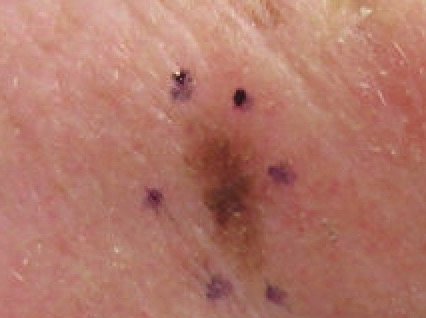
Skin cancer develops when abnormal skin cells grow and divide in an uncontrolled manner. Different forms of skin cancer is able to appear as new growths or changes in existing areas of the skin. A dermatology provider can evaluate suspicious skin changes and discuss appropriate diagnostic testing or treatment based on individual findings. Here is more information on how to recognize signs of skin cancer:
Recognizing Basal Cell Carcinoma
Basal cell carcinoma is a type of skin cancer that often develops on areas exposed to the sun. It may occur on the face, neck, or other areas of the skin. A dermatologist evaluates suspicious growths or skin changes to determine whether further testing is appropriate.
Basal cell carcinoma is able to appear as a pearly or waxy bump on the skin. Some growths have visible blood vessels, while others may look like flat, flesh-colored, brown, or scar-like areas. Appearance varies among individuals and affected areas.
Another possible sign is a sore that bleeds, heals, and later returns. Similar skin changes it is able to occur for reasons unrelated to cancer, so appearance alone does not establish a diagnosis. A dermatology provider can examine concerning areas and discuss diagnostic options based on the findings.
Recognizing Squamous Cell Carcinoma
Squamous cell carcinoma develops in cells within the outer layers of the skin. It it is able to appear as a firm red nodule or as a flat area with a scaly or crusted surface. A dermatologist can evaluate these changes and determine whether diagnostic testing is appropriate.
Other possible signs include a new sore, a raised area along an existing scar, a rough patch on the lip, or a wart-like growth. Squamous cell carcinoma may develop on areas such as the lips, ears, and hands. Because other skin conditions is able to have similar appearances, a professional evaluation helps identify the cause of a suspicious skin change.
Recognizing Melanoma
Melanoma develops in melanocytes, the cells responsible for producing pigment in the skin. It may develop within an existing mole or appear as a new skin lesion. Possible warning signs include:
- Noticing uneven pigmentation: A brownish spot is able to contain areas of darker coloration.
- Observing mole changes: A mole may change in size, color, texture, or appearance.
- Identifying irregular borders: A lesion is able to have uneven edges or contain several different colors.
- Finding dark lesions: Pigmented areas may appear on the palms, soles, fingertips, toes, or other areas.
Skin changes vary in appearance, and these characteristics alone do not establish a melanoma diagnosis. A dermatologist can examine suspicious moles or lesions and discuss whether additional evaluation or testing is appropriate.
Understanding Skin Cancer Risks
Several factors may relate to a person’s cancer risk. Sun exposure and other sources of ultraviolet radiation contribute to skin damage, while personal and family medical history also provides relevant information. A dermatologist reviews these factors alongside individual skin characteristics during an evaluation.
Skin cancer risk factors include fair skin, light hair, light eyes, numerous moles, atypical moles, and a personal or family history of skin cancer. Other factors include a weakened immune system, prolonged sun exposure, previous sunburns, and smoking. Individual risk varies, so the presence of one or more factors does not mean a person will develop cancer.
Cancer is able to develop in different areas of the body, including locations that receive less direct sun exposure. Patients are able to monitor their skin for new growths or changes involving existing moles and lesions. A dermatology provider can examine areas of concern and discuss skin cancer screening based on individual findings and risk factors.
Schedule Your Skin Screening
Recognizing changes in the skin provides information to discuss during a dermatology evaluation. Regular self-exams give patients opportunities to notice new growths or changes involving existing moles and lesions. A dermatologist can evaluate suspicious areas and discuss screening recommendations based on individual findings and risk factors. Schedule a skin cancer screening with a qualified dermatologist today to discuss any new or changing skin concerns.