

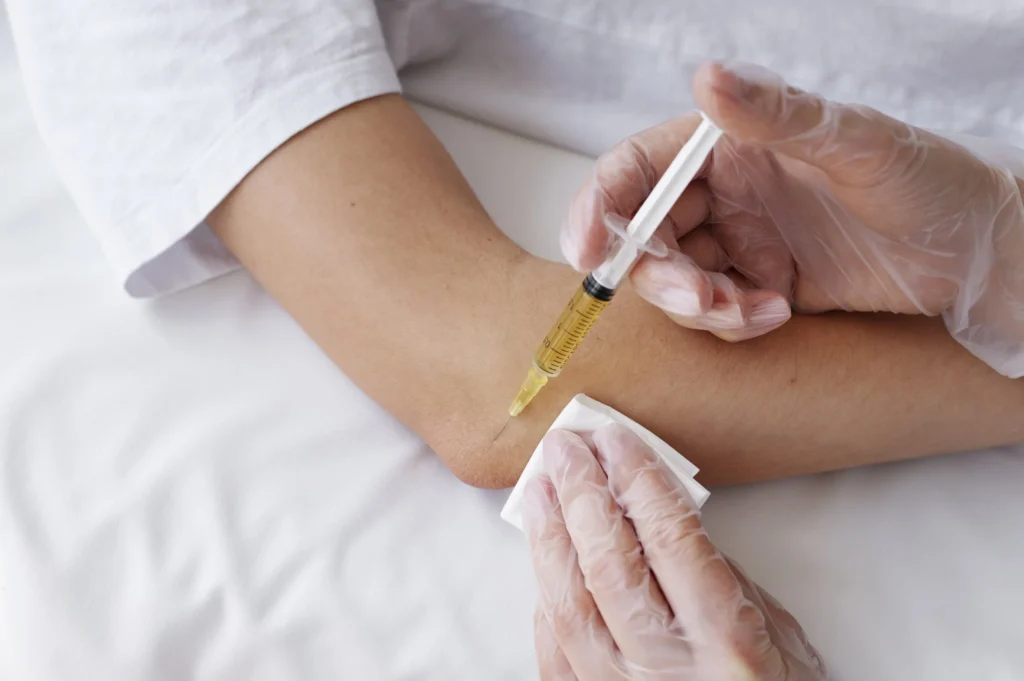
Platelet-rich plasma (PRP) therapy is a regenerative treatment that uses components from a patient’s own blood. The process concentrates platelets before a provider injects the prepared plasma into the targeted treatment area. PRP may be discussed as part of an individualized treatment plan for certain sports injuries and musculoskeletal concerns. Here is more information on the benefits of PRP therapy for sports injuries:
Understanding Platelet-Rich Plasma Therapy
PRP therapy uses a concentrated preparation created from a patient’s own blood. Blood contains plasma and platelets, which contain proteins called growth factors. These components are involved in the body’s natural tissue repair processes following an injury.
During preparation, a provider draws a blood sample and processes it to separate and concentrate the platelets. The provider then injects the prepared PRP into the targeted treatment area. Because treatment needs vary, a healthcare provider evaluates the injury and individual health factors before recommending PRP therapy.
Treating Sports Injuries
PRP therapy may be used for several musculoskeletal conditions involving joints, tendons, ligaments, and soft tissues. A healthcare provider evaluates the location and type of injury before determining whether PRP fits the treatment plan. Conditions treated with platelet-rich plasma include:
- Treating tendinitis: PRP is able to address conditions such as golfer’s elbow and tennis elbow.
- Treating joint concerns: Platelet-rich plasma may be used for knee pain, joint injuries, and arthritis-related joint damage.
- Treating spine pain: PRP is able to form part of a treatment plan for certain sources of spine discomfort.
- Treating ligament injuries: Platelet-rich plasma may address strained or damaged ligaments.
- Treating soft tissue injuries: PRP is sometimes used for certain muscle and soft tissue concerns.
Platelet-rich plasma may also be used during some surgical procedures as part of the treatment process. Recommendations vary based on the injury, symptoms, medical history, and individual treatment needs.
Supporting the Healing Process
PRP therapy uses concentrated platelets prepared from a patient’s own blood. Platelets contain growth factors involved in the body’s natural healing response. A provider injects the prepared platelet-rich plasma into the targeted area based on the patient’s treatment plan.
After injection, the concentrated platelets release growth factors at the treatment site. These proteins participate in processes associated with tissue repair and the body’s response to injury. Individual responses to platelet-rich plasma treatment vary depending on the injury and other health factors.
Platelet-rich plasma treatment focuses on supporting the body’s existing repair processes rather than introducing a separate healing mechanism. A healthcare provider evaluates the affected tissue, symptoms, and medical history before recommending treatment. Follow-up care allows the provider to review the patient’s response and discuss additional treatment when appropriate.
Understanding Platelet-Rich Plasma Treatment
Platelet-rich plasma treatment begins with a blood draw, followed by processing that separates and concentrates the platelets. The provider prepares the platelet-rich plasma and injects it into the targeted treatment area. Some patients experience temporary discomfort, bruising, or swelling around the injection or blood draw site. A healthcare provider explains activity recommendations and follow-up care based on the treatment area and individual needs.
Schedule Your PRP Consultation Today
Platelet-rich plasma therapy uses concentrated platelets from a patient’s own blood as part of a regenerative treatment approach. Providers may use PRP for certain joint, tendon, ligament, muscle, and soft tissue concerns. A pain management specialist evaluates the injury, symptoms, medical history, and treatment goals before recommending PRP therapy. Schedule a consultation with a qualified provider to discuss whether PRP fits your individualized treatment plan.